


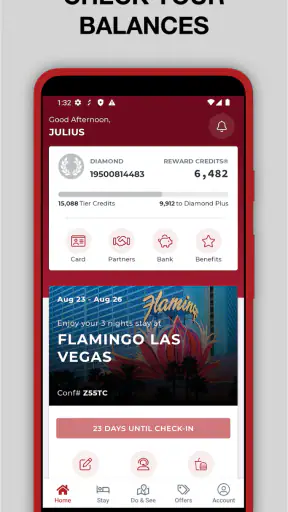
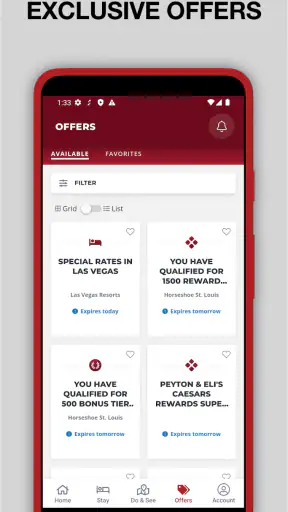
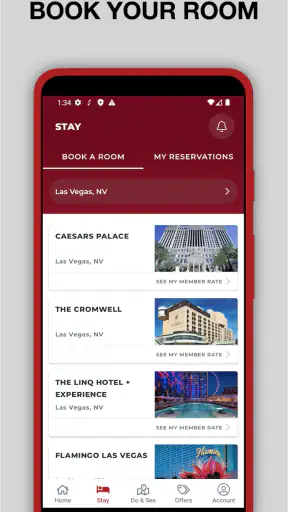
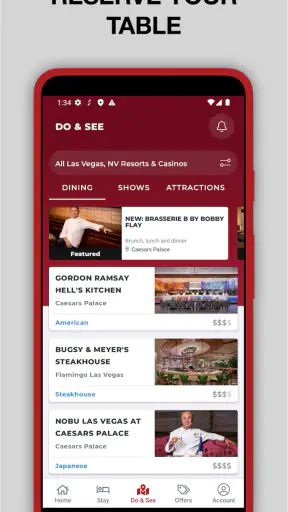
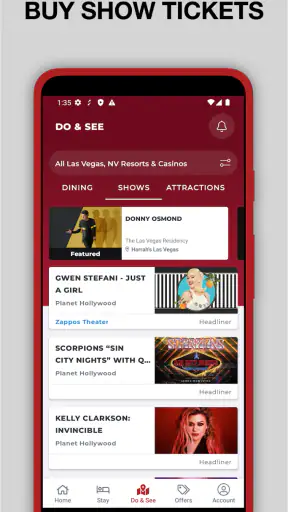
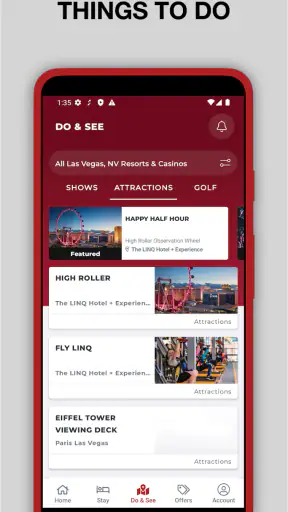
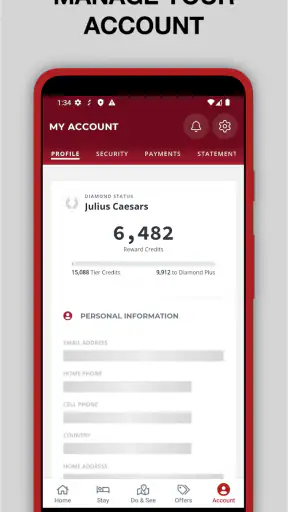
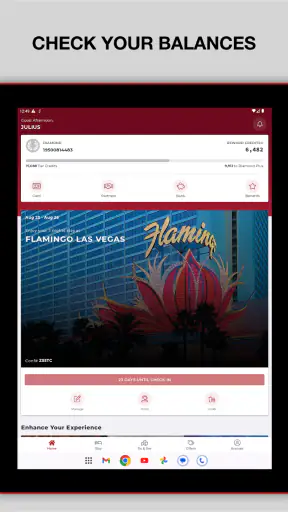
I approached Caesars Rewards Resort Offers as a travel companion rather than simply a booking shortcut. It is a free Travel & Local app from Caesars Entertainment, built around resort offers and Caesars Rewards locations in places such as Las Vegas, Atlantic City, and New Orleans. That focus makes it most useful when I am already considering a Caesars destination, not when I am comparing every hotel in a city.
My first impression was that the app makes the most sense for travelers who want to keep resort information, member-related offers, and trip planning in one place. It is available for mature users aged 17 and over, and the current release is version 9.10.4 for devices running OS 10 or later. Those requirements are worth checking before a trip, especially if I am helping an older relative use it on an aging phone.
How the app handles readability and navigation
The strongest part of the experience is its destination-specific purpose. Instead of presenting itself as a general travel marketplace, it points me toward the Caesars ecosystem. That narrower scope can reduce decision fatigue when I already know I want a Caesars property, because I am not sorting through unrelated hotel brands or a huge range of third-party listings.
At the same time, the app asks me to understand the relationship between a resort offer, a destination, and the broader Caesars Rewards experience. A first-time visitor may not immediately know whether an attractive offer is mainly useful for a planned stay, a member benefit, or a wider resort activity. I found that the safest approach is to read each offer carefully and note its conditions before treating the displayed value as a complete trip price.
For readability, I would use the app in a calm setting before leaving home rather than trying to learn it while walking through a busy casino or airport. Travel apps often place several kinds of information close together: property details, dates, promotions, and account-related actions. Even when the wording is understandable, the practical meaning can change depending on the selected destination or travel dates.
A useful workflow is to decide on the city first, then inspect the available resort choices, and only afterward compare the offer against the dates I actually want. I would also save a note outside the app with the property name and the important terms. That small step helps if I need to explain the booking to another traveler or return to it after switching between several screens.
The app’s popularity suggests that it has found a broad audience: it has more than a million installs, an average rating of 4.6 from about 53 thousand ratings, and roughly 8.6 thousand written reviews. I do not read those figures as proof that every traveler will find the interface effortless. They do show that the app is established enough to be a realistic option for people planning Caesars trips rather than an obscure companion tool.
Finding the right information without rushing
I would be especially careful when using the app with someone who has difficulty reading dense screens or remembering a sequence of choices. Rather than handing over the phone and saying “find the best deal,” I would narrow the task: choose the destination, check the dates, review the offer, and confirm what is included. Breaking the process into those steps makes the app less demanding for people with attention, memory, or language-related challenges.
That approach also helps avoid a common travel mistake: confusing a prominent offer with the final arrangement needed for the whole trip. An offer may be attractive while still requiring me to think about transportation, companions, dates, or other expenses separately. The app is useful for organizing the Caesars portion of the decision, but I would not rely on it as my only travel checklist.
Motor and sensory considerations in real use
People with limited dexterity may find any travel app tiring if it requires repeated date changes, precise taps, or frequent movement between account and resort screens. My practical recommendation is to complete the planning phase while seated, with the phone supported on a table. That sounds simple, but it reduces accidental touches and gives me time to review each selection instead of making choices under pressure.
For users who experience visual fatigue, the best strategy is to avoid comparing many offers in one session. I would inspect one destination and a small number of relevant options, then take a break. A large catalog can become difficult to process even when each individual screen is readable. The app’s value comes from focused planning, not from endlessly browsing every possible resort combination.
Travel also creates sensory challenges that have little to do with the software itself. A casino resort can be bright, noisy, crowded, and full of competing signs. Someone who is sensitive to sound or visual stimulation may prefer to use the app in the hotel room, at home, or during a quiet part of the journey. Planning the property choice before entering a busy environment can prevent the app from becoming one more source of overload.
For a traveler with hearing-related needs, written offer details are particularly important because they provide something to review without depending on a conversation at a front desk. I would still keep a written record of questions that need human confirmation. The app can help me arrive prepared, but it should not be treated as a replacement for asking the resort about an individual requirement.
Users who rely on larger text, screen magnification, voice control, or other device-level tools should test the main journey before committing to a reservation. The relevant question is not simply whether the opening screen is manageable. I would check whether I can select a destination, read the offer conditions, move through dates, and recognize the final action using the assistive setup I normally depend on.
A realistic planning example
Imagine I am arranging a short Las Vegas trip for myself and a family member who dislikes making online bookings. I would first review the resort offers at home, identify the property and dates, and write down the important details in plain language. Then I would show my companion only the choices that fit our plan. This avoids asking them to navigate the entire app and leaves room to discuss practical issues such as arrival timing and room preferences.
If the family member has limited hand movement, I would do the tapping while reading every important choice aloud and asking for confirmation. If they have low vision, I would enlarge the device display and use the same slow, one-screen-at-a-time process. The app becomes more inclusive when it supports a shared decision rather than forcing one person to complete every step alone.
This is also where the app differs from a general hotel comparison service. A broad travel marketplace may be better for comparing Caesars with unrelated brands, checking independent reviews, or combining hotels and transport. Caesars Rewards Resort Offers is more focused: its advantage is keeping the Caesars destination context together, while its limitation is that it is not the neutral, all-brand search tool I would choose for an open-ended trip.
Access in different travel situations
The app is most comfortable before the trip, when I have stable time and attention. I can compare a resort offer with my intended dates, discuss the choice with another traveler, and make a note of anything that needs clarification. That preparation matters for users who need extra time, a larger display, or assistance from a companion.
Using it during transit is less appealing. Airports, stations, hotel lobbies, and rideshares create interruptions, glare, noise, and unreliable concentration. I would avoid making an important booking while carrying luggage or standing in a queue. If I need the information on the move, I would prepare screenshots or written notes beforehand rather than depending on a live search at the last moment.
For travelers who change plans often, the app can still be useful as a reference point, but I would recheck the offer whenever the dates or destination change. Resort promotions are inherently tied to the details of a trip, so an option that looked right yesterday may not be the right choice after a schedule change. This is a reason to treat the app as an active planning tool, not a one-time download that can be ignored.
It also works best for people whose trip is centered on Caesars destinations. Someone visiting Las Vegas for a conference across several hotel brands may prefer a general travel app for the overall itinerary and use this one only for the Caesars portion. Someone traveling with accessibility needs may likewise want to use it alongside direct communication with the property, because app-based planning cannot answer every room, arrival, or on-site question.
Families and groups should agree on who is responsible for checking the offer details. Shared trips often fail because one person assumes another person read the conditions. I would nominate one planner, keep the selected resort and dates visible to everyone, and confirm the final arrangement together. That workflow reduces confusion for older travelers, people with cognitive disabilities, and anyone who is simply uncomfortable with mobile booking.
Where the experience can still create barriers
The biggest barrier is not necessarily a single difficult control; it is the amount of interpretation required from the traveler. Resort offers can sound straightforward while still demanding careful attention to dates, destination, and what the traveler actually needs. A person with limited digital confidence may understand the words but still feel unsure about whether the choice is complete.
Another limitation is brand dependence. If I want the widest possible selection, the app is not the right starting point. Its usefulness grows when I am already considering Caesars locations and shrinks when I need independent comparisons. That is not a flaw in its purpose, but it is an important trade-off for travelers who want one app to cover every hotel, attraction, and transport decision.
The mature age rating also changes who should use it independently. Adults can make their own decisions, but families should not assume that a younger traveler will be the appropriate person to manage the app simply because they are comfortable with phones. The content and resort context make it better suited to the adult who is responsible for the trip.
Device compatibility can create another practical obstacle. The app requires OS 10 or later, so anyone using an older phone may need to update the device or ask a companion to handle the planning. I would check this before travel rather than discovering the problem when an offer needs to be reviewed quickly.
I also would not use the app as the sole source of reassurance for a traveler with specific support needs. It can organize the resort side of a trip, but individual requirements may need direct confirmation. A good inclusive workflow combines the app with a written travel plan, a companion when helpful, and clear questions prepared in advance.
My inclusive verdict on Caesars Rewards Resort Offers
My recommendation is conditional but positive: this is a sensible free app for adults who are planning a Caesars-centered trip and want resort offers in a focused mobile experience. I like it most as a preparation tool, used slowly at home, with the destination and dates decided before I begin comparing options.
Its strongest inclusive quality is flexibility of use. I can plan alone, work with a companion, enlarge the phone display, take breaks, and prepare notes before entering a demanding travel environment. Those habits make a noticeable difference for people with visual, motor, cognitive, hearing, or sensory considerations, even though the app itself does not remove every travel barrier.
I would skip it as my primary travel app if I am comparing many hotel brands, building a complicated multi-city itinerary, or expecting one service to answer detailed personal-access questions. A general travel marketplace is better for broad comparison, while direct contact with the resort is better for confirming individual arrangements.
For the right traveler, however, the focused approach is a genuine advantage. The app comes from Caesars Entertainment, costs nothing to download, and has been available since February 17, 2014, giving it a long presence in the travel-app space. I would install it when a Caesars property is central to my plans, review the offers without rushing, record the details I need, and use another travel resource alongside it when the trip extends beyond the Caesars ecosystem.
In short, I see it as a practical companion rather than a complete travel solution. It can make resort planning more manageable, especially when I adapt the workflow to the traveler’s abilities and surroundings. Its inclusive value comes less from promising a perfect experience and more from giving me a focused place to prepare, compare, and make a considered choice.


